

Connecting for Change: Advancing Food Safety for More Sustainable Food Systems
Connecting for Change: Advancing Food Safety for More Sustainable Food Systems
Herman Teirlinck Building
With the support of:

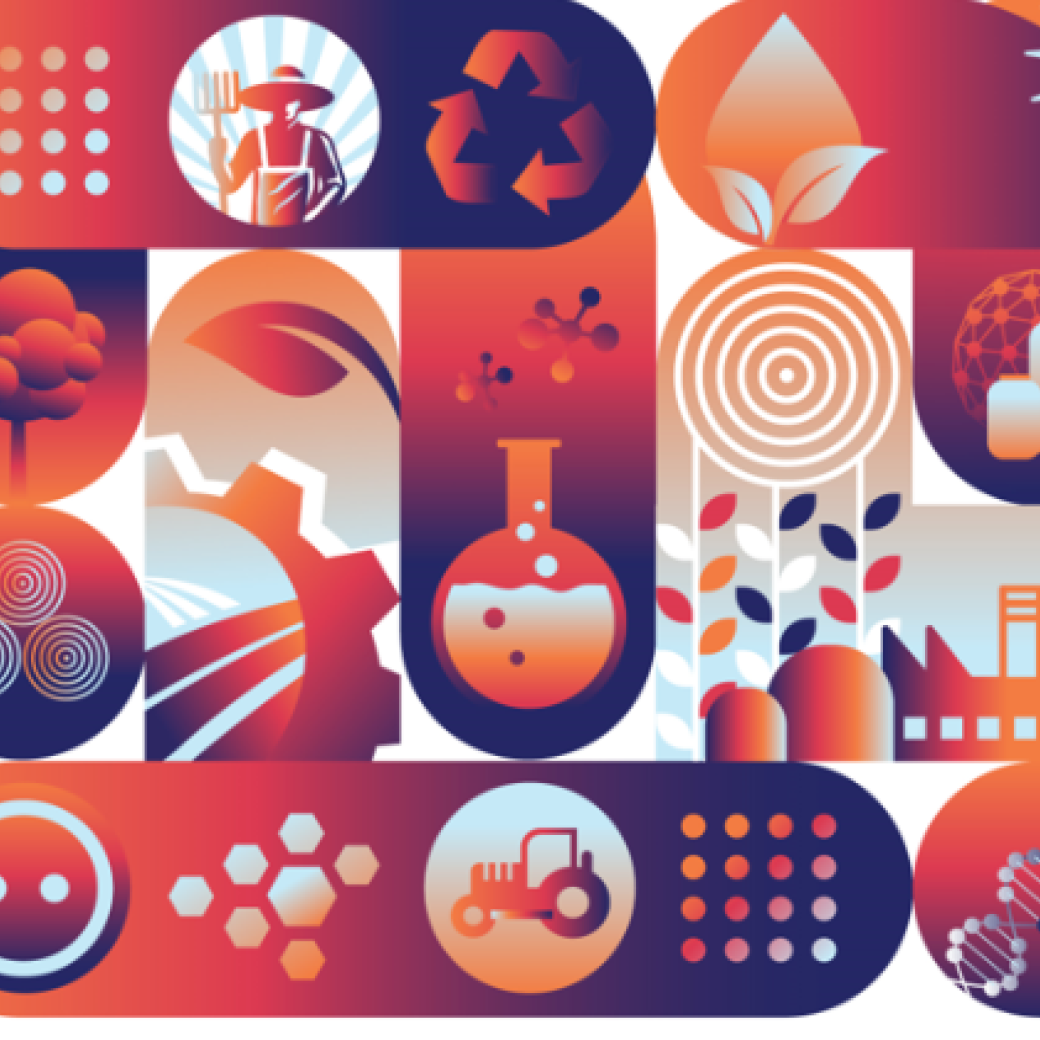
CIRCULANDIA is a European Horizon Europe project that develops, demonstrates and scales circular solutions for regenerative agriculture, local food systems and reusable packaging. The project brings together businesses, cities, regions, research and civil society organisations, and citizens to make food systems more sustainable, resilient and climate-friendly. Through practical demonstrations and replication activities across different European regions, CIRCULANDIA aims to accelerate the transition towards circular food systems.
Food systems are increasingly challenged by climate change, resource scarcity, biodiversity loss and growing amounts of waste. At the same time, the need for local, resilient and sustainable food production continues to grow.
CIRCULANDIA is based on the conviction that these challenges can only be addressed through systemic change. The project therefore focuses on three closely interconnected themes:
By bringing these themes together, CIRCULANDIA aims to support cities and regions in developing future-proof circular food systems.
How does CIRCULANDIA work?
CIRCULANDIA employs a three-tier scaling model. Innovations are first developed and tested in demonstration cities and regions. The solutions are then adapted to new contexts in replication cities. Finally, they are further disseminated through multiplier regions, enabling successful practices to be adopted on a wider scale.
In this way, the project develops transferable and scalable models that contribute to the European Green Deal and the Circular Cities and Regions Initiative (CCRI).
What happens within the project?
CIRCULANDIA includes a wide range of demonstration, innovation and scaling activities, including:
Developing new governance and business models for circular food systems.
The role of Flanders’ FOOD
Within CIRCULANDIA, Flanders’ FOOD supports the development and scaling of circular solutions across food value chains. This involves collaboration with companies, cities, regional authorities, research organisations and civil society organisations throughout Europe.
Within the project, the City of Roeselare acts as a replication city for innovative local food systems. Together with Flanders’ FOOD, successful demonstrations from other European regions are translated into the Flemish context. In addition, Flanders’ FOOD contributes to the development of methodologies and handbooks that help other regions implement and scale circular food systems.
For Flanders, the project offers opportunities to further develop and embed new circular business models, local food chains and innovative forms of collaboration within the existing innovation ecosystem.
Impact
CIRCULANDIA aims to contribute to:
Wider adoption of circular business models across Europe.
By not only developing solutions but also systematically scaling them, the project aims to make a lasting contribution to the transition towards a circular and climate-neutral food sector.
CIRCULANDIA brings together 35 organisations from 12 European countries, including cities, regions, companies, research organisations, NGOs and innovation clusters, all working together to develop and scale circular food systems.
Core partners
Associated partners
In addition, several cities and regions support the wider deployment and scaling of the solutions developed throughout Europe.