

Connecting for Change: Advancing Food Safety for More Sustainable Food Systems
Connecting for Change: Advancing Food Safety for More Sustainable Food Systems
Herman Teirlinck Building
With support of:


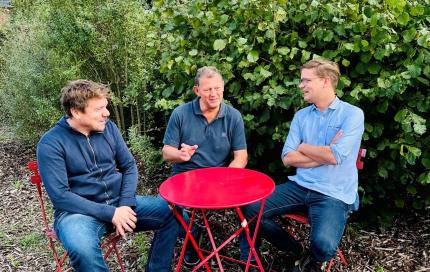
As part of HazelSamen, farmers Johan, Len, Betty and Filip were involved in a new collaboration focusing on growing and processing hazelnuts. They received support from Migino, ILVO, Boerenbond Projecten and Flanders Food.
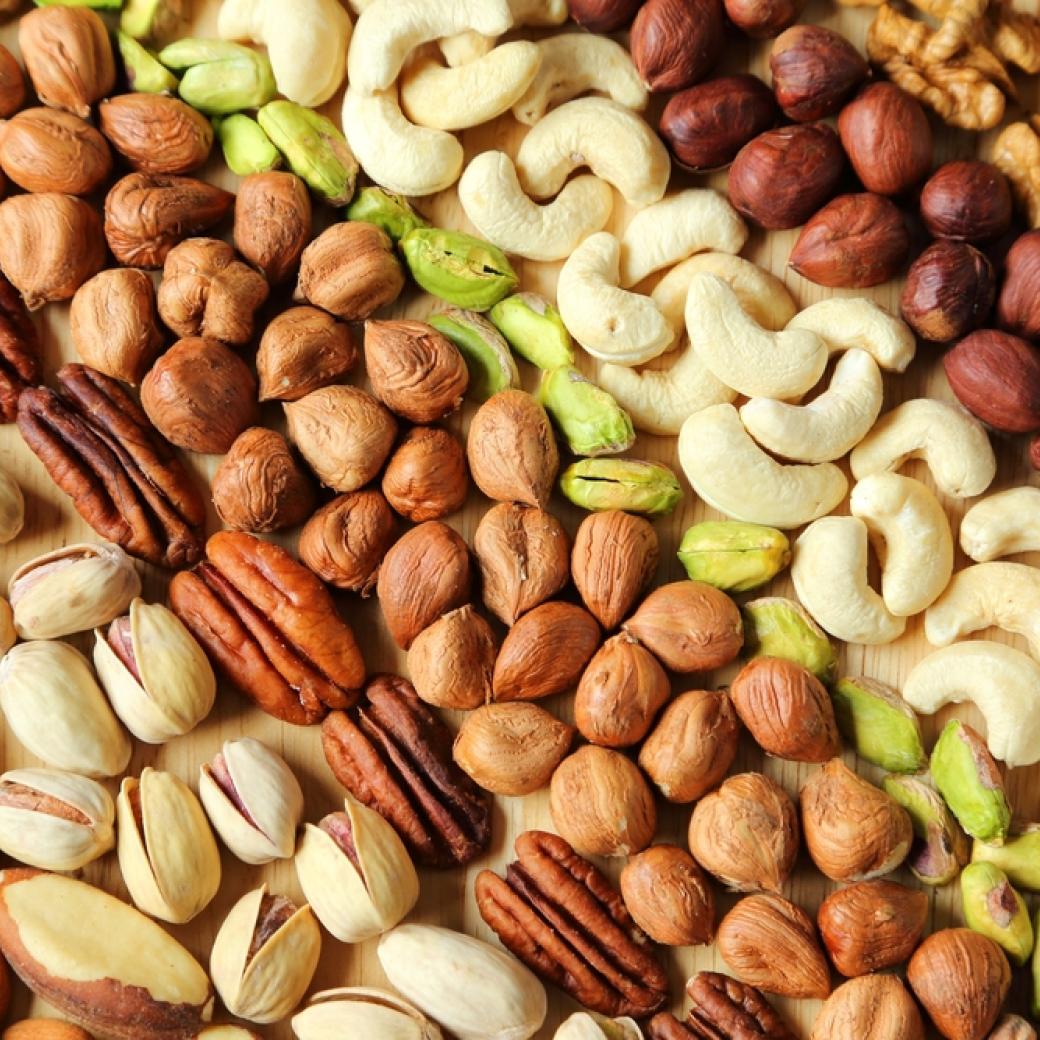
Hazelnuts are a suitable crop for farms looking for other future prospects. The crop is indigenous but still rather niche in Flanders (±12 ha). Hazelnuts are sold internationally at high market prices. The average market price is €25.5/kg for shelled hazelnuts (from project ‘Nood aan noot’) and in Belgium there is sufficient demand from the chocolate industry. Moreover, vacant barns can be converted into a building where nuts can be shelled and dried. Lastly, hazels make a positive contribution to farm biodiversity, soil erosion resistance and the landscape value of the region.
Within the EIP preparatory project HazelSamen, several activities were carried out over the course of one year to explore the feasibility of a local hazelnut value chain in Flanders. Through interactive sessions with farmers, knowledge was gathered and exchanged on cultivation practices, variety selection, profitability, collaboration and potential market channels.
In addition, significant efforts were made to map the current Flemish hazelnut sector, including acreage, production volumes and cultivation motivations, as well as the needs and expectations of potential buyers, including food processing companies.
A highlight of the project was the inspiration event held on 25 Novemeber 25, where — after ten months of project activities — growers, new entrants, processors and other stakeholders jointly reflected on bottlenecks and opportunities within the hazelnut value chain.
The project also facilitated knowledge exchange with other regions, including contacts and a study trip to Wallonia. Furthermore, initial discussions were held with potential buyers such as Migino and Ranobo to better define quality and volume requirements.
The project resulted in a strengthened network of Flemish (potential) hazelnut growers, improved insights into technical, logistical and market-related challenges, and a clear consensus that collaboration is essential to achieve sufficient scale, quality and market access. These insights formed the basis for an informal growers’ network and the application for a follow-up project under the name HazelPlus.
The aim of this project was to reach farmers who would like to be part of a partnership focusing on hazelnuts. This partnership was open to experienced hazelnut growers and tree growers, as well as those who are still new to the crop. We were also looking for actors who use hazelnuts or their by-products in their production process and who see added value in hazelnuts from their own region. In consultation with them, we explored what role they can/will play in a possible cooperation with hazelnut producers. Other companies might also come forward if they are interested in helping this new farming initiative get off the ground.
Flanders Food managed and coordinated the project. The other subsidised partners were Boerenbond Projecten and ILVO. Migino assisted the operational group as a non-subsidised partner. Participating farmers were Filip Donck, Len Van den Berge, Betty Eeckhaut, Lieven Polet and Johan Erregat.
Flanders Food was the project coordinator. Flanders Food also used its network within the agri-food industry to list initiatives related to sponsoring local agricultural activities. Flanders Food encouraged subsequently companies to apply one of these initiatives for farmers in this operational group.
Boerenbond Projecten supported farmers with their expertise in finding a common vision that should lead to a new collaboration involving hazelnuts in Flanders. In addition, Boerenbond Projecten looked for new farmers to join this operational group.
ILVO, as coordinator of the ‘Agroforestry Flanders’ consortium, supported our group of farmers with knowledge on the technical aspect of cultivation, as well as its profitability. For this, ILVO relied on previous research from the ‘Nood aan noot’ project and on ongoing research from the PRO-NOOT project. Furthermore, ILVO looked for new farmers within the various working groups on agroforestry.


HazelSamen clearly demonstrated that establishing a fully operational local hazelnut value chain is only feasible when sufficient production volume and a critical minimum acreage are achieved. Farmers therefore expressed a strong need for a follow-up trajectory.
This resulted in the submission of the follow-up project HazelPlus (EIP innovation type), coordinated by ILVO. Through HazelPlus, five farmers — supported by ILVO and Boerenbond Projects — aim to move from practical experience and intuition towards evidence-based knowledge and quantitative data regarding cultivation practices, labour requirements and profitability. This should also enable other farmers to make well-informed decisions about entering hazelnut cultivation. If approved, HazelPlus will start in April 2027.
In parallel, the VLAIO-LA project PRO-NOOT is ongoing, focusing on the professionalisation of nut cultivation in Flanders, including hazelnuts. Within PRO-NOOT, a company visit to Ranobo is organised on 28 April 2026 for interested farmers, to examine the quality requirements for incoming nuts and the associated logistics. Registration is possible here.
In addition, farmers interested in small-scale novel crops such as hazelnuts can make use of the Post Harvest Pilot facility of ILVO (Plant Unit) for drying, grading and sorting harvested products. For more information about these projects or the pilot installation, contact can be made via jolien.bracke@ilvo.vlaanderen.be.