
Quantifying crispness using acoustic analysis (KRAK)
With the support of:

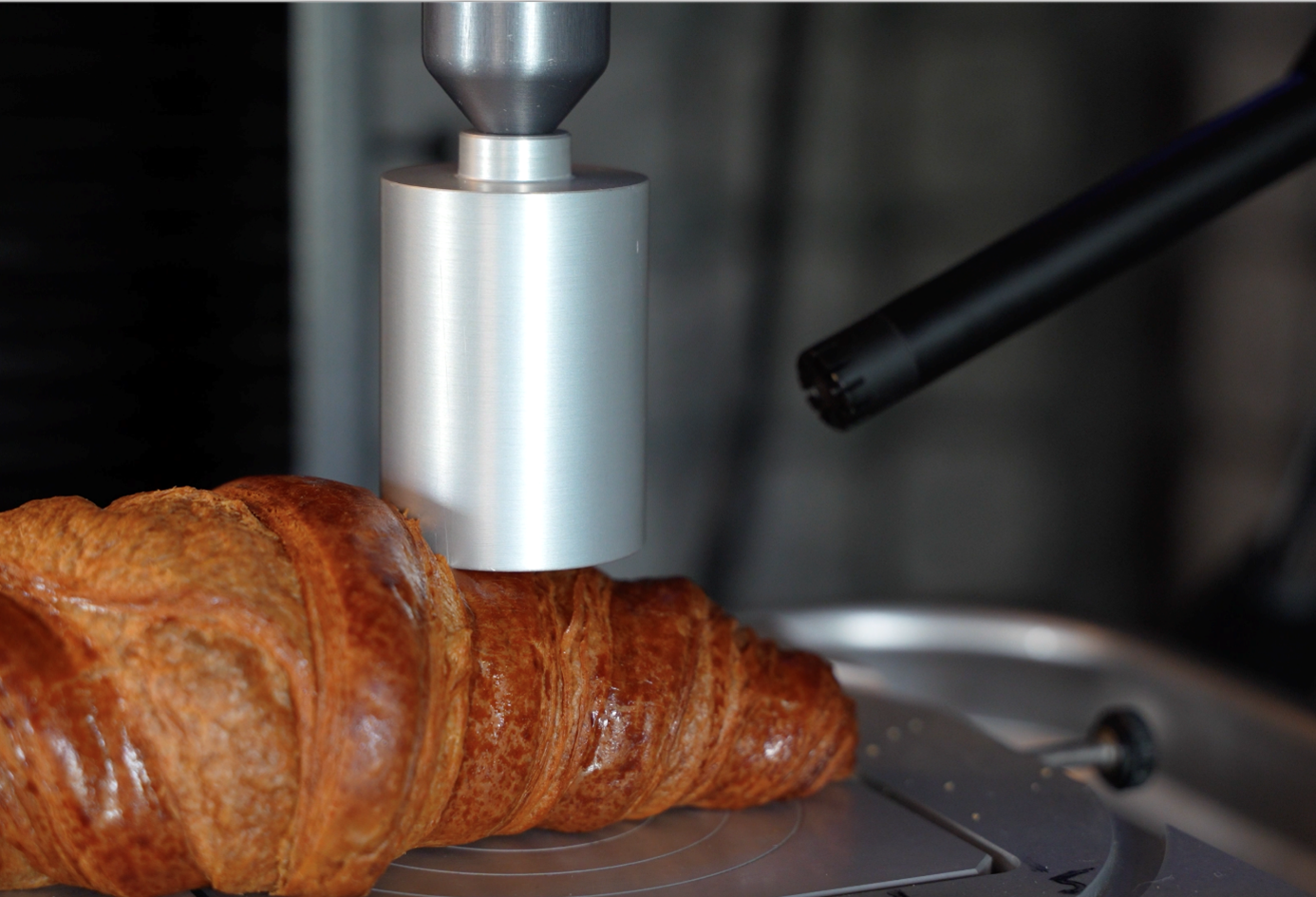
Crispness is a crucial texture attribute in certain food products, yet measuring it objectively remains a challenge. The KRAK project combines acoustic measurements and sensory analysis to map texture attributes such as crispness and snap. This TETRA project aims to provide practical knowledge and tools for measuring texture attributes such as crispness and snap in food products using acoustic measurements.
Why this project?
Crispness is a crucial quality attribute of many food products. A biscuit should be crispy and crack when broken; a chocolate bar, or the chocolate coating of an ice cream, should produce a sound when you bitten into; granola should be crunchy.
Textural perceptions are physical sensations involving touch, but often also hearing. Texture attributes can be mapped through sensory analyses by a selected and trained sensory panel (expert panel). Texture analysers are used for instrumental texture measurements, including fracture tests, to measure properties such as hardness or elasticity. However objectively measuring crispness and snap using instrumental techniques remains a challenge.
Research approach and expected results
During this two-year TETRA project, both acoustic measurement methods for various food product categories and audio analysis techniques will be developed. The KRAK project aims to provide hands-on knowledge and tools for recording and processing advanced audio analyses, with and/or without data-driven techniques. Acoustic measurements will be conducted in the Audiolab of VIVES in Roeselare.
Companies in the advisory group have selected a number of product categories for the advanced sound measurements, including crisps, biscuits, (baguette) bread, chocolate and breaded products.
Researchers will develop methods using Design of Experiments (DoE). In the next project phase, the developed methods will be validated and the acoustic data will be correlated with sensory data from expert panels and/or in-house company sensory panels.

Target group
The target audience for this project is very broad and includes food companies (producers of crispy products), ingredient suppliers, large-scale catering companies, technology companies (equipment manufacturers), AI companies and packaging companies.
Project partners
Katholieke Hogeschool VIVES:
- Research group Food Processing of VIVES – Michaël Verlinden (michael.verlinden@vives.be)
- Research group Mechatronics of VIVES – Jonas Lannoo (jonas.lannoo@vives.be)
KU Leuven:
- Research group Mechatronics, Biostatistics and Sensors (MeBioS) – Bart De Ketelaere
Flanders Food is a subcontractor in this KRAK project.



Keen to join?
You can join the project via the Advisory Group until the end of the project.
Participation fee and terms and conditions
Participation in the project requires a financial contribution. If you join at a later stage of the project, the project contribution will be charged retroactively.
- Small enterprise: € 1,000 for the 2-year KRAK-project
- Medium-sized enterprise: € 2,000 for the 2-year KRAK-project
- Large enterprise: € 3,000 for the 2-year KRAK-project
