AMR4FOOD
With support of


Supporting food manufacturing companies in assessing whether mobile robots (AMRs and AGVs) are suitable for their internal logistics, with a focus on technical feasibility, food specific challenges and the impact on work organisation.
Why this project?
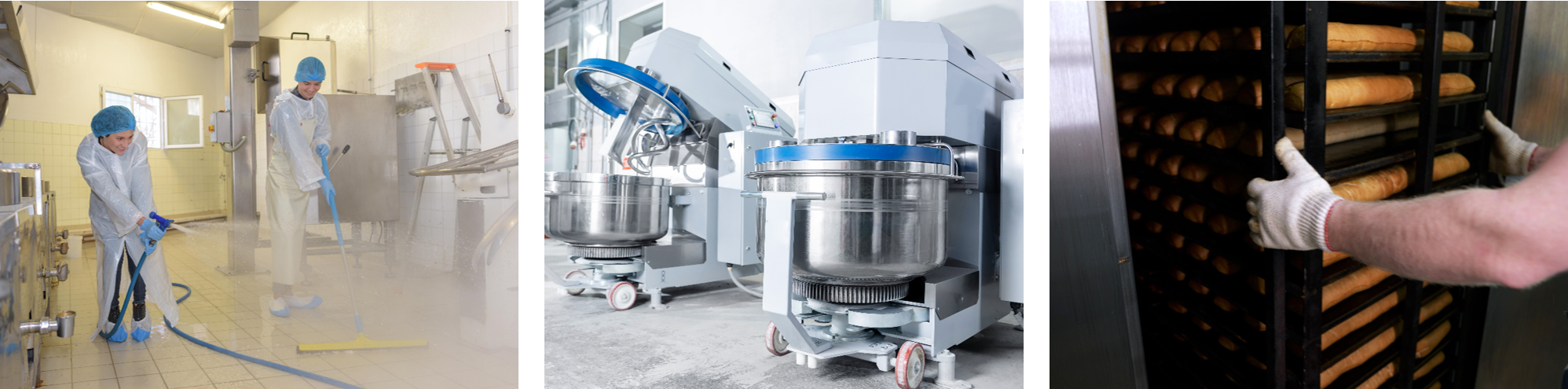
In the food industry, many logistical tasks between processing steps are still carried out manually. Typical examples include supplying packaging materials with a pallet truck or moving racks filled with food products.
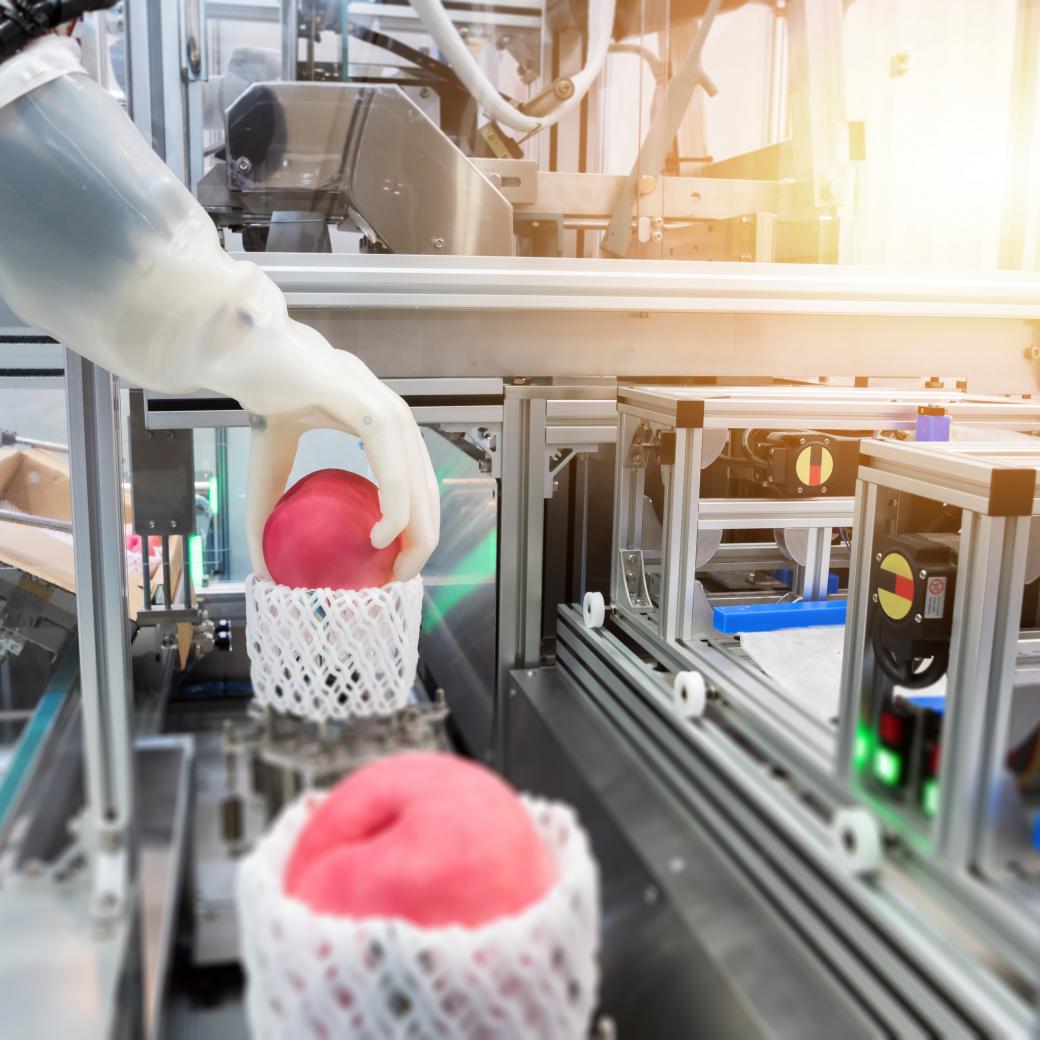
In the manufacturing sector, autonomous vehicles are already being used to automate repetitive, low value tasks. Even in food warehouses operating under 'normal' conditions, this technology is becoming more common. However, the deployment of Autonomous Mobile Robots (AMRs) directly within food production environments can also offer significant benefits.
For successful AMR implementation in the food industry, several challenges still need to be addressed. Which vehicles are commercially available and certified for use in food processing environments? Can the technology handle specific conditions such as moisture, contamination and low temperatures? And how will employees respond to these changes?
Research approach and expected results
AMR4FOOD is a COOCK+ project in which Flanders Food collaborates with Sirris, Workitects and Alimento. To familiarise food companies with mobile robots and support them in assessing whether AMRs or AGVs are relevant in their specific context, the following research approach is being followed:
- A market study of the latest AMR and AGV solutions and their suitability for the food industry, complemented by input from the advisory group to define realistic challenges.
- Analysis of three industrial cases in the food and manufacturing sectors to identify technological, social and human barriers to AMR or AGV acceptance.
- Development of a demonstrator showcasing solutions for food specific challenges and serving as an example of an Industry 4.0 production environment.
- A practical implementation roadmap, including
- a technical track (organisation, infrastructure, vehicle selection),
- a social track (job impact, risk assessment, stakeholder engagement), and
- a financial track (ROI and business case, including social benefits).
- A targeted awareness campaign, featuring accessible communication and hands on demonstrations tailored to diverse audiences and varying levels of digital maturity.
Target group
This project focuses on Flemish food companies that want to build knowledge on deploying and implementing mobile robots within their production environment. The results are especially relevant for sectors with intensive internal transport, such as industrial bakeries, the meat sector and producers of ready made meals.
Technology suppliers are also an important target group — including machine builders, system integrators, software developers and consultants. This applies both to complete robotic systems and to specific components such as safety sensors enabling communication between robots and production machinery.
Project partners
Flanders Food manages and coordinates the project. Implementation is carried out in collaboration with:
- Sirris - Filiep Vincent and Remi Debaveye
- Workitects - Lieven Eeckelaert
- Alimento - Annemie Salu




Keen to join?
To ensure the results are as relevant as possible for the food sector, the project includes an advisory group with representatives from food companies and technology providers.
What does participation involve?
- The group meets twice a year in person to share the latest project results and provide input for further research.
(Six physical meetings in total over the three year duration.) - Participants can actively influence the research direction, for example by helping decide which solutions should be included in the demonstrator.
Participation fee and conditions
Participation in the advisory group is free of charge, provided that your organisation is a member of Flanders Food and/or Sirris for the entire duration of the project (2025–2028) and pays the associated membership fees.
If joining at a later stage, membership will be invoiced retroactively.